My last post I mentioned my dog, but I never shared how she came into my life.
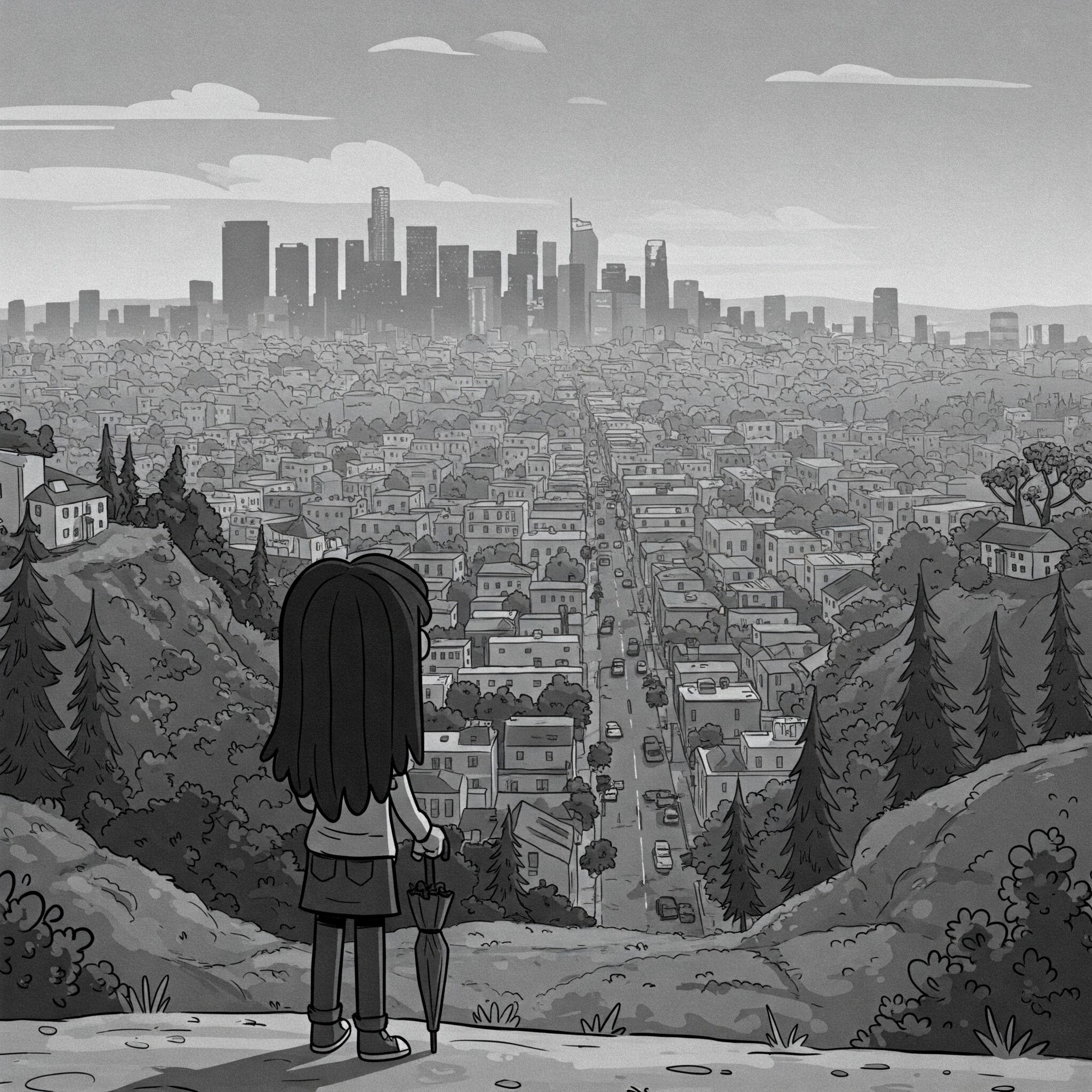
I was about 17 when we had just moved into a new house. It was an odd house perched on the corner of a windy hill. The road stretched for two miles with no sidewalks, tight curves, blind spots, and hardly any cars. If you drove up far enough, your cell service would disappear. Our house sat fourth from the very top, surrounded by silence and cliffs instead of backyards. What we did have was a front yard that wrapped around the house and a view unlike anything else. On a clear day without smog, you could see the whole sweep of Los Angeles down to the ocean. That view was the reason my parents bought it.
But beauty came with isolation. The neighbors lived in large mansions, most of which had been burglarized at some point. One afternoon I was home alone when someone knocked on our door. From my bedroom window upstairs, I watched a man peer through windows, circling the house like he was casing it. A second man climbed out of a beat-up car. I panicked and called my mom. Just then, by luck, the mail truck came around the bend. The men slipped back into their car and drove away.
Most families might have installed an alarm system or cameras. My mom, Estella, decided instead that we needed Dobermans. Not one, but two. She reasoned that one would be lonely, but two could keep each other company.
Like everything with my parents, it was never a calm decision. My mom had a way of saying, “If you need anything, it will be a fight with your dad. I will fight with him, but we can see if we can get it.” She never meant a real conversation. She meant an argument. So instead of asking him, she went straight to Craigslist.
I was the only one who wanted the dogs, so I tagged along. We ended up with two eight-week-old Doberman puppies, each from different litters and breeders. When my dad came home that day, they were waiting in the living room. The fight that erupted was so loud I barely remember the details, just the chaos.
The puppies became Mercy and Trinity. Mercy, the black Doberman, was calm to the point of lazy. All she wanted was food and to stay glued to your side. Trinity, the brown Doberman, was her opposite, wild energy bottled up in a sleek body. She could hop six-foot fences like it was nothing. Once she leapt over to chase a wild animal, clearing the fence as if it were only a stone in her path. After that, we had to get huge planters filled with cacti to keep her in. Thankfully, she was not aggressive, just nervous and excitable. She would rush up to people with her whole body wiggling, happy but unsure of herself.
They had the sweetest personalities, but the lack of training made them overwhelming. It was embarrassing at times, like when I babysat the kid across the street and he wanted to meet them. They did not know their size and would barrel up to him, jumping with excitement, their long nails scratching by accident. Estella shrugged it off, seeing no urgency in trimming their nails or grooming them at all.
My mom was never affectionate and treated the dogs like loud ornaments for the yard. She encouraged them to bark at every cyclist, car, or person who passed by, which only fueled their fearfulness. She dismissed them as bad dogs without ever trying to change anything.
One memory that stands out was when I convinced her to let the dogs inside. I was always testing the boundaries, trying to prove they could be part of our home. They ran around the living room like a storm of energy, bumping into people as they walked, full of excitement at being inside. Estella sat on the couch trying to watch TV while eating her Hot Cheetos. The girls begged for a bite. Annoyed, she said, “I will teach them a lesson not to beg,” and handed each of them a Hot Cheeto, sure the heat would scar them into never asking again. Instead, Mercy and Trinity munched them down and wagged their tails for more. I could not help but laugh. In her attempt to punish them, they only proved how much more love and joy they carried than she ever expected.
That moment reminded me of how she handled her children too. She gave us Benadryl every night to force us to sleep, too impatient to wear us out with play or care. It was the same shortcut, the same unwillingness to nurture, the same attempt to control through quick fixes rather than effort. Whether it was her kids or her dogs, the pattern was clear.
Mercy and Trinity were never the bad dogs my mom believed them to be. They were sweet girls with quirks and big personalities, shaped more by neglect than by nature. To me, they were proof that love can live in the most chaotic, misunderstood places. Even when their world was fenced in by cliffs, fights, and indifference, they looked for joy and gave it back in return. Looking back, I realize they taught me more about loyalty, patience, and compassion than most people in my life at the time. They wanted nothing more than to belong, and in loving them, I found a piece of myself that wanted the same.
 My Soul's Notes
Leave a comment